Hitchhiking in Morocco: how it actually goes (and how to do it right)
Is hitchhiking in Morocco safe? Honest field notes on wait times, the grand-taxi confusion, the hospitality, and the one thing to watch — with real stories from the road.
The BUNK Team
Work-for-stay travellers & hostel nerds
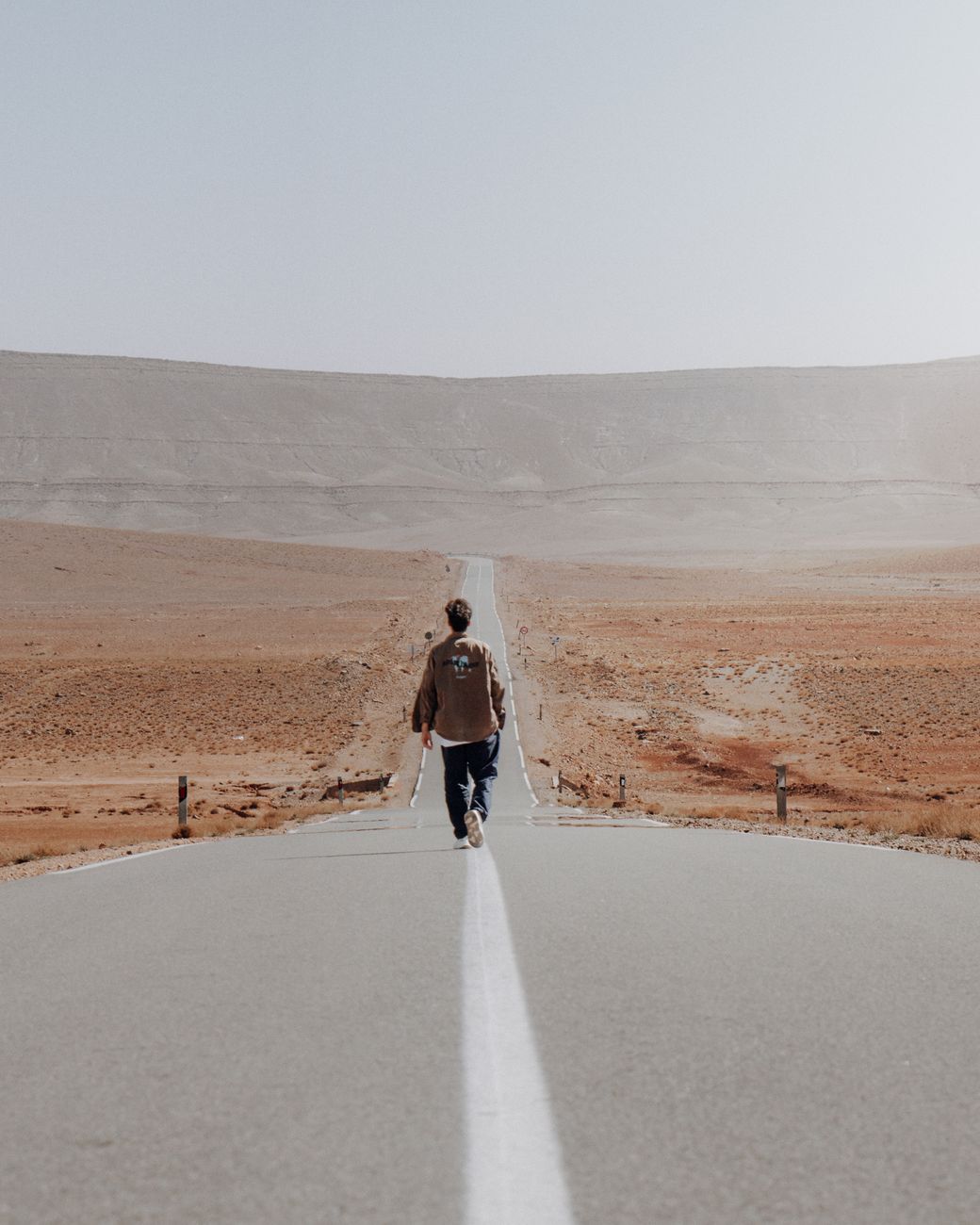
A man at the edge of Tamraght once told me, very confidently, that nobody hitchhikes in Morocco. Twenty minutes later I was in a van full of French surfers eating dates and being told to "travel as much as you can while you're young." So. Take the warnings with a pinch of salt — but not none.
Let's get straight to it: hitchhiking here is easier and warmer than almost anywhere I've tried, and it comes with one specific catch most guides skate over. Field notes, the honest version.
Is it actually safe?
Honestly? Yes — with the normal caveats. Traveller after traveller reports feeling welcomed and respected, never in danger, often a bit overwhelmed by how kind people are. Someone will offer you tea. Someone will offer you a meal, or a floor to sleep on, and mean it.
That's the rule, not the exception. But "mostly safe" isn't "always," so:
- Trust your instinct on who you get in with. If a car feels off, wave it on. There's another along in minutes.
- Sit where you can get out. Keep your bag where you can grab it.
- Solo is doable, but a pair is easier and calmer — especially for women.
The catch nobody mentions: grand taxis
Here's the thing that trips people up. Stick your thumb out and a battered Mercedes might pull over — but it's a grand taxi, a shared taxi that runs set routes city to city, and the driver fully expects to be paid. It's not a scam; it's just a different thing wearing the same gesture.
So clarify before you climb in. Point down the road, name your town, and ask if it's free — "gratuit?" A real lift will laugh and wave you in. A taxi will quote you a price (which is negotiable, like everything). Sort it on the kerb, not at the destination.
How to get picked up fast
The mechanics that actually work:
- Make a sign. Cardboard from a bin, a borrowed pen, your destination in big letters. It does half the work for you.
- Stand past the police checkpoint on the edge of town — cars are already slowing, there's room to pull in, and you've skipped the awkward in-town crawl.
- Pick a spot with space to stop. A driver can't help you if there's nowhere to pull over.
- Learn three words of Darija. Salam, shukran, la shukran (hello, thanks, no thanks) go a long way.
- Carry water and patience. Buy a bottle for 5 dh and relax. It usually doesn't take long.
A real run: Tamraght to Essaouira
One traveller's notes from the Tamraght–Essaouira road (about three hours) read almost like a how-to. They scavenged cardboard, borrowed a pen, bought a single 5 dh bottle of water — their only expense all day — and deliberately set up past the checkpoint where cars had to slow. Stopwatch on: a ride in five minutes and thirty seconds. A van of fellow surfers with French plates, headed the same way. Midway they pulled over and shared their dates and snacks. The only night they paid for was a bed at the end, around €21, because a 12kg backpack and a long day win eventually.
I love that detail — the free ride and the paid bed. That's hitchhiking. Romantic right up until your shoulders give out.
The long haul: Agadir to Fès
Going further? It's been done thumb-first — Agadir to Fès, roughly 500km, threading through Marrakech, Demnate, the Ouzoud falls, Azilal, the lake at Bin el Ouidane, up to Ifrane and Chefchaouen. Expect a patchwork: a 100km lift here, a stretch on foot there, a grand taxi when the lifts dry up (one dropped a group 9km short of where they needed — so they walked it). Expect, too, the hospitality — a stranger near Ifrane offering a meal and a bed after a rough patch. And expect the odd genuinely wild moment: that same traveller fending off a stray dog with a stick at dusk. Not every hour is a postcard.
You are far from home. So today my car is your car.
So — should you?
If you've got time, a flexible plan and decent instincts: absolutely. It's the cheapest, most human way to cross this country, and the conversations are the trip. If you're on a tight clock or you'd spend the whole ride tense, take the CTM bus and don't feel bad about it. Both are fine. Just don't let the man at the edge of town tell you it can't be done.
Frequently asked questions
Is hitchhiking in Morocco safe?
For most people, most of the time, yes — travellers routinely report short waits and warm, generous drivers, and many never feel in danger. It isn't officially encouraged and it isn't risk-free, so trust your gut on each ride, and travelling in a pair is the easiest way to feel comfortable.
Do drivers in Morocco expect to be paid?
Sometimes. A genuine lift won't cost you, but a shared "grand taxi" will stop for a raised thumb and expect a fare. Clarify before you get in — point down the road and ask "gratuit?" so nobody's surprised at the other end.
How long do you wait for a ride in Morocco?
Often surprisingly little. Travellers regularly report waits under 15 minutes, and on good roads it can be a couple of minutes. One blogger got picked up between Tamraght and Essaouira in five and a half minutes flat.